Big Bad Actors: A Global View of Debt
IMF Blog, October 5, 2016
Source details
- Canonical URL
- Big Bad Actors: A Global View of Debt
Other formats
Bibliographic details
- Authors: Vitor Gaspar, Marialuz Moreno Badia
- Published: October 5, 2016
Overview
- Publication: Big Bad Actors: A Global View of Debt
- Authors: Vitor Gaspar, Marialuz Moreno Badia
- Date: October 5, 2016
- Central message: The October 2016 Fiscal Monitor provides the first near-global estimate of debt, showing record-high global debt that poses significant risks to the global recovery, with distinct patterns and risks across country groups.
Key global statistics and summary findings
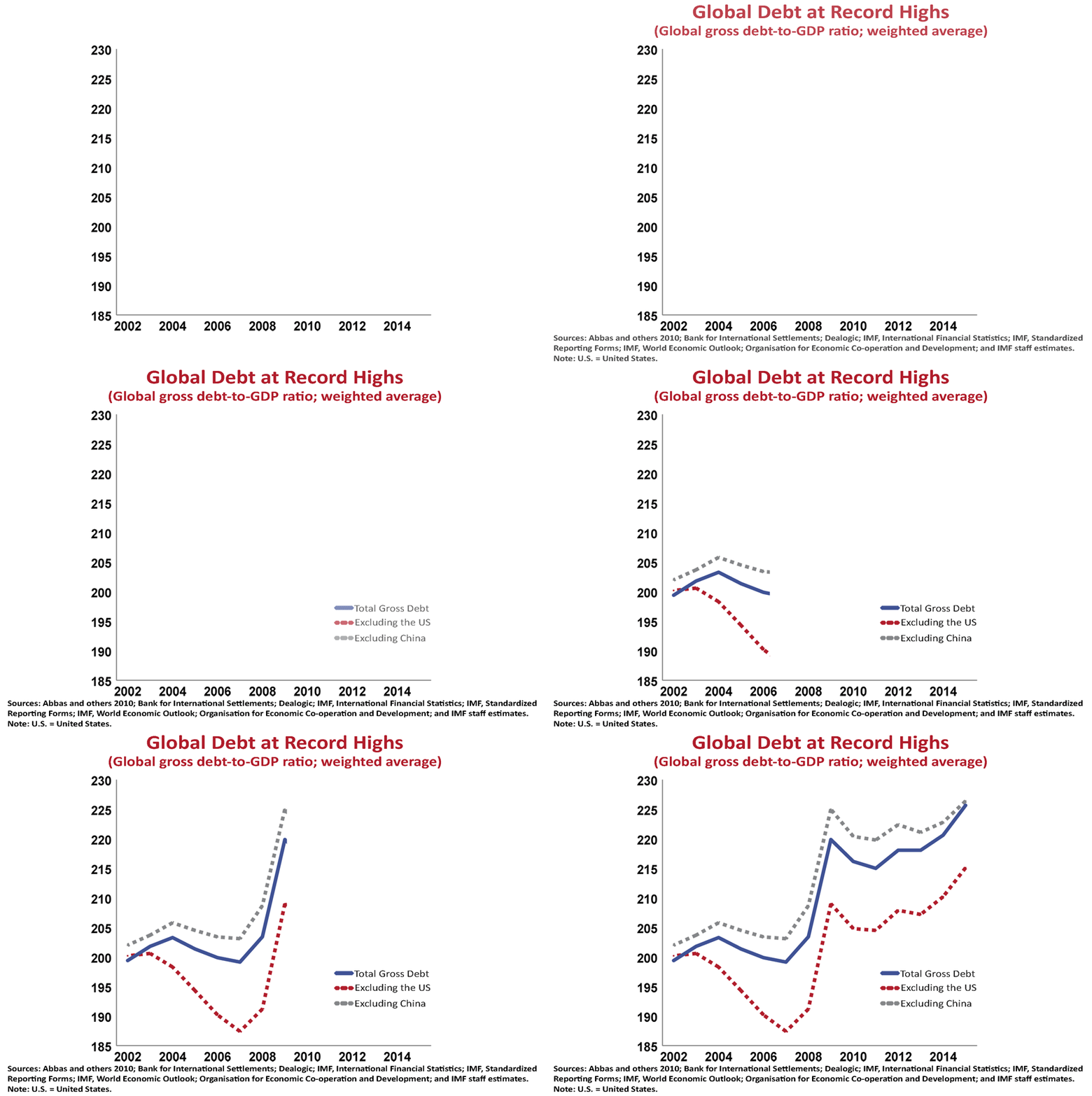
- Global debt amounts to $152 trillion or 225 percent of global GDP (Chart 1).
- Close to $100 trillion or about two thirds are liabilities of nonfinancial firms and households (private debt); the remainder is public debt.
- High debt levels represent a major headwind against the global economic recovery and exacerbate the risk of a debt-deflation spiral.
Trends by country group
- Advanced economies:
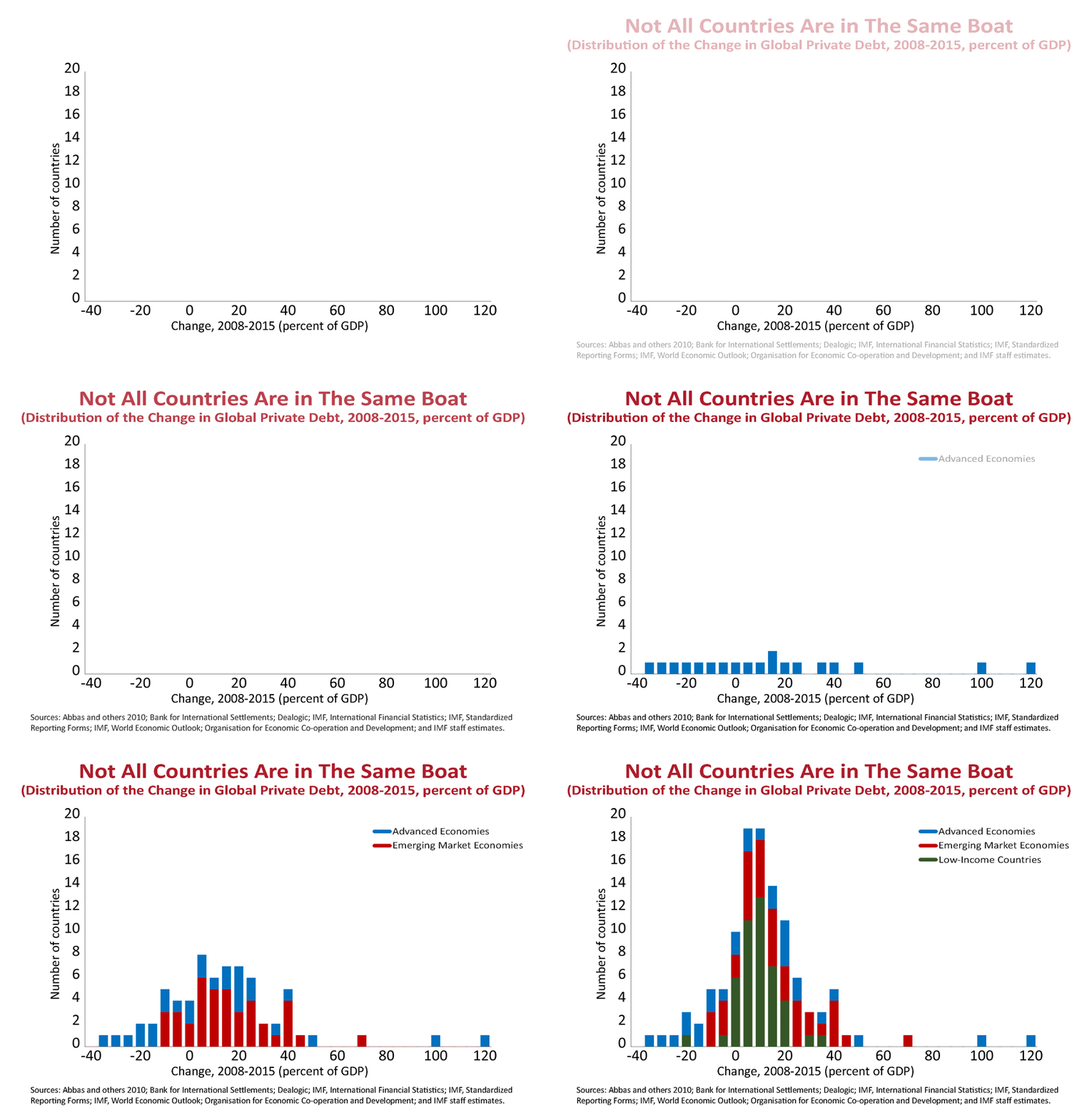
- Deleveraging has been uneven across advanced economies (Chart 2, blue bar).
- Private debt ratios have continued rising in most countries within this group.
- Public debt has increased, partly due to migration of bad private debts onto public balance sheets.
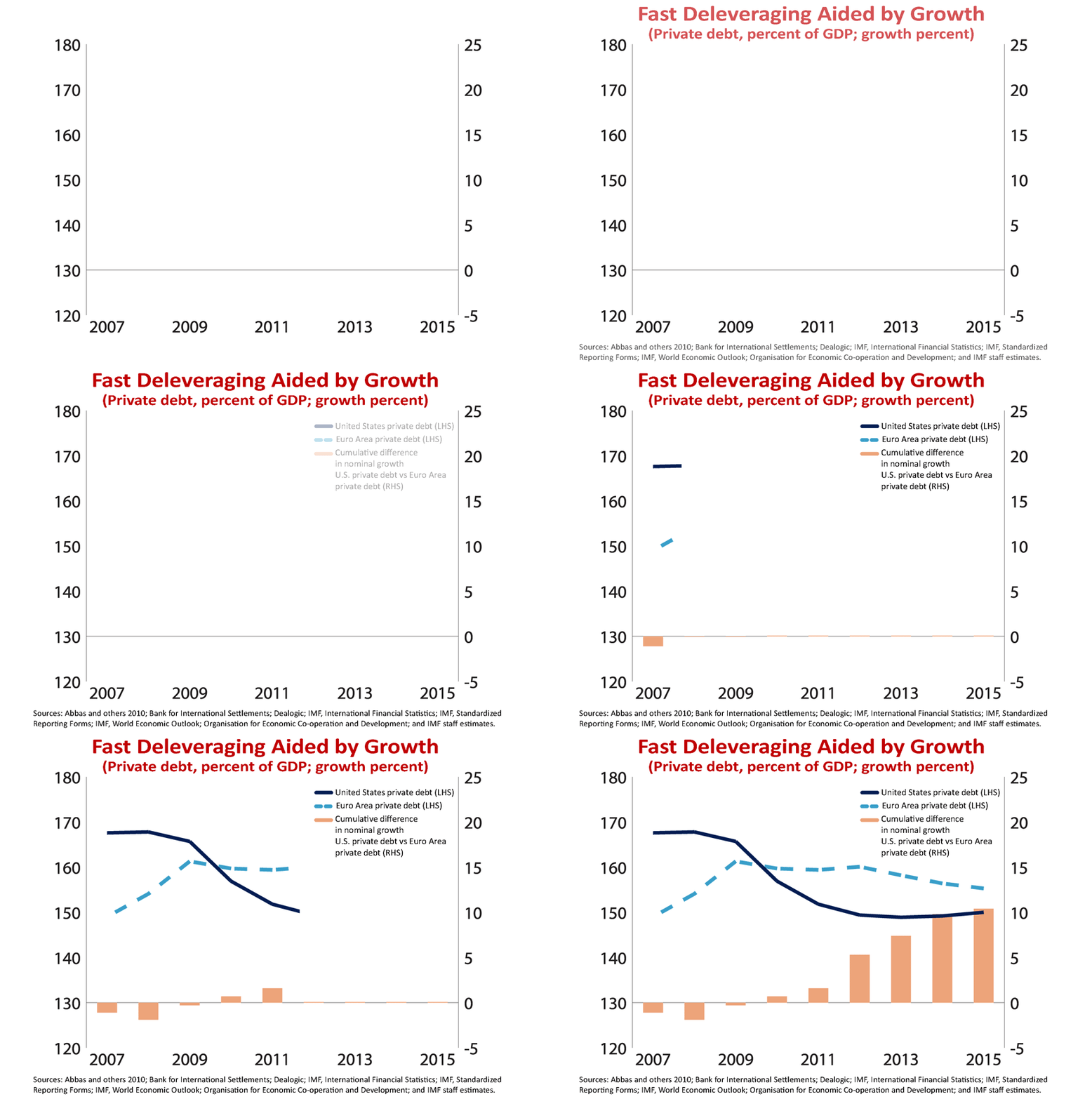
- Lack of progress in deleveraging is traced mainly to the low nominal growth environment.
- Comparison: The United States reduced private debt much more than the euro area in the aftermath of the crisis but enjoyed higher growth rates as well (Chart 4).
- Emerging market economies:
- Low interest rates have led to a surge in nonfinancial corporate debt in a few systemically important emerging market economies, notably China (Chart 2, red bar).
- The recent debt expansion in emerging market economies raises questions about the underlying health of fiscal positions, given historical precedents in advanced economies.
- Low-income countries:
- Both private and public debt have increased thanks to deeper financial markets and improved market access, though debt ratios remain generally low.
- Advances in microfinance lending and mobile banking have contributed to financial inclusion.
- Financial development is positive provided debts remain sustainable.
Risks and implications
- Excessive private debt is associated with financial crises; financial recessions are longer and deeper than normal recessions and cause larger output losses and higher job losses.
- Excessive private debt can mutate into public debt, worsening fiscal positions.
- Weak fiscal positions amplify the severity of financial recessions (Chart 3), particularly in emerging market economies where public spending is often slashed in crises.
- Even absent a crisis, high private debt can hamper growth as indebted borrowers cut consumption and investment sharply.
- The historical analogy to Irving Fisher: too high debt and too low inflation are persistent dangers, especially for advanced economies.
Policy recommendations and corrective measures
- Avoidance target:
- Debt is fundamental for entrepreneurship and innovation; the policy focus should be on avoiding excessive private debt, not debt per se.
- Regulatory and supervisory measures:
- Ensure monitoring and sustainability of private debt through regulatory and supervisory policies.
- Tax policy:
- Gradually phase out tax distortions favoring debt over equity in corporations, financial and non-financial.
- Growth-friendly fiscal policies:
- Use growth-friendly fiscal policies to facilitate adjustment in countries mired in excessive private debt, depending on country circumstances and available fiscal resources.
- Resources may come from prior saving and reducing public debt in good times.
- Crisis-resolution tools where financial systems are under severe stress:
- Early resolution of underlying problems is critical.
- Government-sponsored programs to reduce private debt (for example, subsidies for creditors to lengthen maturities or guarantees) and measures to accelerate balance-sheet cleanups (for example through asset management companies) can be highly effective.
- Design principles to minimize costs and moral hazard:
- Target measures to specific sectors or individuals.
- Subject interventions to conditionality.
- Involve burden sharing with borrowers.
- Accompany interventions with strong insolvency and bankruptcy procedures.
- Complementary policies:
- Fiscal policy must be supported by monetary and structural policies, implemented within consistent and credible policy frameworks.
Concluding outlook
- The authors argue for eliminating the “big bad actors” of excessive debt and low inflation and emphasize the need for coordinated, well-designed fiscal, regulatory, monetary, and structural policies to enable a transition toward a renewed acceleration in nominal growth.
Source: Big Bad Actors: A Global View of Debt, Vitor Gaspar and Marialuz Moreno Badia, October 5, 2016.
Content in this bundle
- “大反派”:债务问题纵览, 作者:Vitor Gaspar和Marialuz Moreno Badia, iMFdirect, 2016年10月5日
- 巨悪に立ち向かう:債務の世界的な情勢; ヴィトル・ガスパル、マリアルス・モレノ・バディア, iMFdirect; 2015年10月5日
- Staff Discussion Note
- Крупные негативные факторы: глобальный взгляд на долг
References
- عربي
- Read the report
- Fiscal issues at the IMF
- Fiscal Monitor
- https://www.imf.org/wp-content/uploads/2016/09/global-debt-record-highs.gif
- https://www.imf.org/wp-content/uploads/2016/09/countries-not-in-same-boat.gif
- https://www.imf.org/wp-content/uploads/2016/09/weak-fiscal.gif
- https://www.imf.org/wp-content/uploads/2016/09/fast-deleveraging.gif